
How WBFF Judging Works: T-Walk, Quarter Turns and Marketability

Ask ten first-time competitors what the judges are looking for at a WBFF show and you will hear ten different answers. Some assume it is a leanness contest. Others think it is closer to a pageant. The truth sits in the wording of the category criteria themselves, which keep returning to the same handful of terms: symmetry, tone, presentation, confidence and marketability. This guide walks through how those terms play out across the rounds, from the morning T-walk to the evening show, so you know what is actually being assessed when you step under the lights.
Two shows in one day
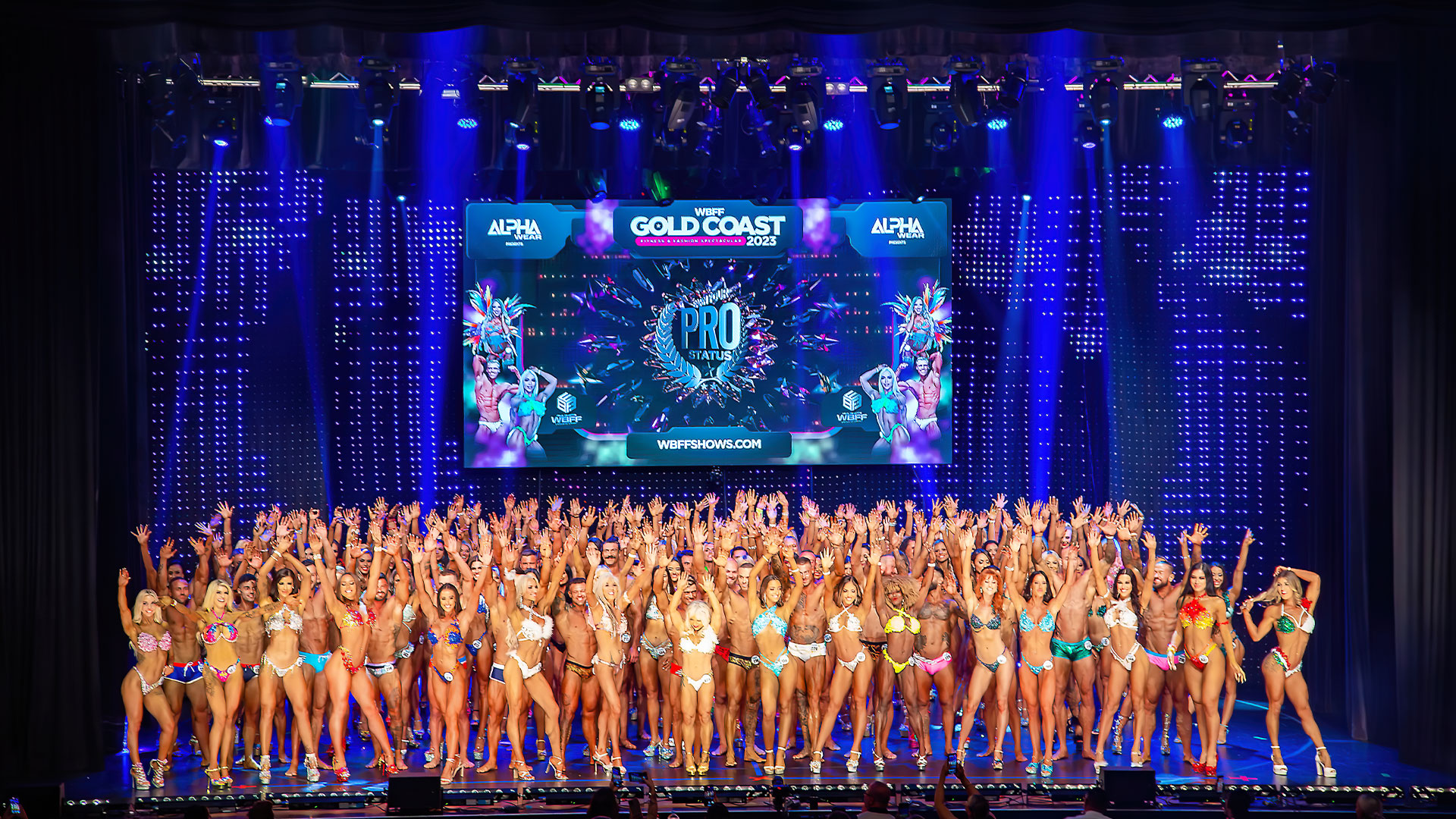
A WBFF Australia show day is split into a morning show and an evening show. The category pages describe the bikini rounds for the diva divisions and the swimwear rounds for the men as running "Morning & Evening", and they refer to the T-walk being performed for both the preliminary and final shows. In practice that means the physique round is seen twice: once in the morning, when the panel does the bulk of its comparison work, and again at night in front of the full evening audience.
The evening show then adds a second round that the morning does not have. Which round you get depends on your division:
- Evening gown round: Diva Bikini Model and Diva Wellness Model.
- Theme wear round: Diva Fitness Model and Diva Figure Model.
- Evening wear round: Men's Fitness Model and Men's Physique Model, in formal attire.
The full round structure for each division is set out on the categories page, and it is worth reading your own category twice before you plan a single outfit.
The T-walk: your individual presentation
Every model category at a WBFF show performs a T-walk. It is the moment each competitor has the stage alone, and it is where the organisation's emphasis on presentation becomes obvious. In general terms a T-walk traces the shape of the letter: you enter, walk to the centre, come forward toward the judges, then move out to each side of the stage before returning to centre and exiting. At each point you pause and present.
Music is supplied by the show. The category pages are explicit that music is not needed for any of the female or male model categories or the figure categories, so there is nothing to choreograph to a specific track. What you can control is pace, posture and transitions. The competitors who score well in presentation tend to look as though they have walked that pattern a hundred times, because they have.
Exact stage markings and the walk pattern for your show are covered in the Competitor Guide that every registered competitor receives, and again at the competitor meeting the evening before.
Quarter turns: the comparison round
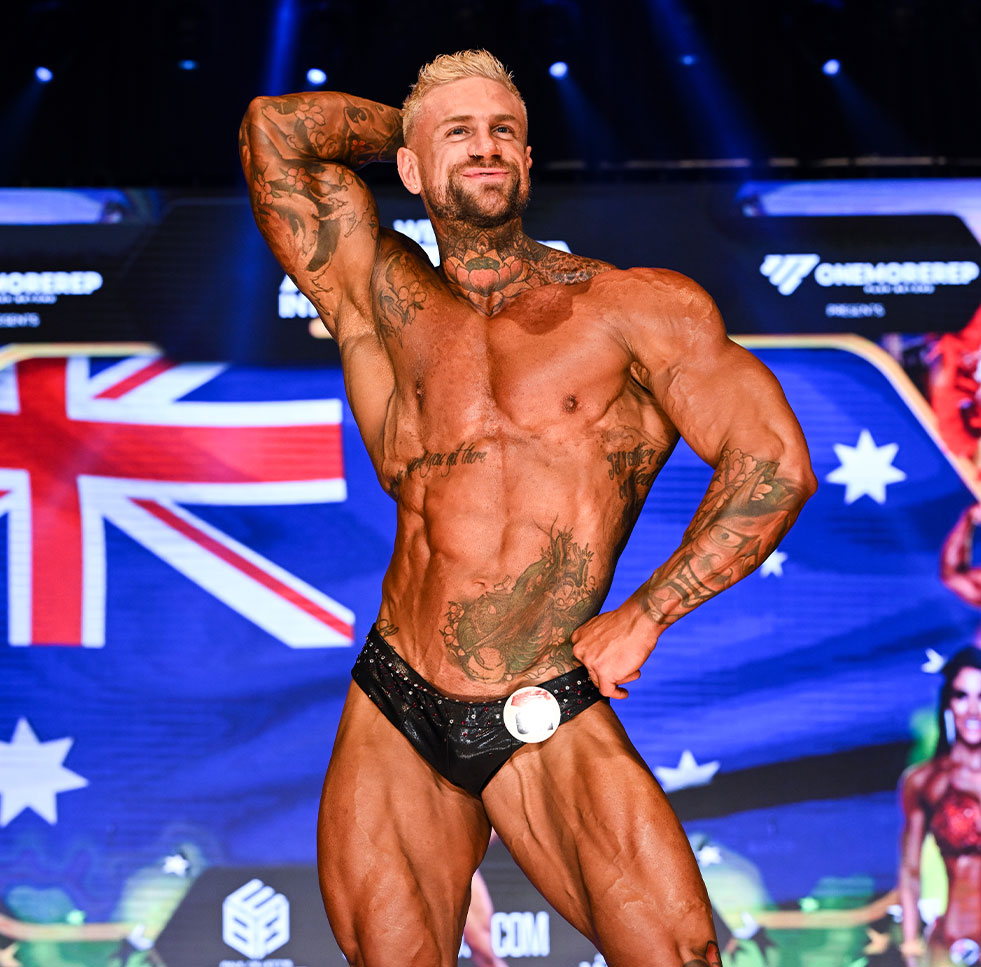
If the T-walk is about you as an individual, quarter turns are about you next to everyone else. Competitors stand in a line and turn through four positions (front, side, back, opposite side) so that the panel can compare physiques from every angle under the same lighting. For the men's fitness and physique divisions, the category pages specify that quarter turns happen during the preliminary judging rounds.
This is where the physical criteria carry the most weight, and where the wording differs between divisions in ways that matter.
Symmetry
Symmetry appears in the criteria for almost every category. It means balance: left to right, and upper body to lower body. The Diva Fitness Model description puts it most plainly, stating that competitors should be evenly balanced from top to bottom in both muscle tone and definition.
Tone, definition and development
Here the divisions separate. Diva Bikini Model rounds are based on symmetry, body tone and overall beauty. Diva Fitness Model adds definition and an athletic appearance. Diva Figure Model asks for definition and muscle tone with a stronger look than bikini or fitness models. Diva Wellness Model is assessed on muscle tone with a fuller lower body, and the criteria specifically say the body should be free of muscle separation and not overly lean.
The men follow a similar ladder. Men's Fitness Model is judged on symmetry, tone and an athletic appearance. Men's Physique Model is assessed on overall physique, conditioning, symmetry and muscle definition. Men's Muscle Model adds muscular development to the list. In every case, being leaner or bigger than your category calls for is not a bonus. It simply means you are presenting the wrong look for that line-up.
Poise and posture
The men's criteria name good poise and posture directly, alongside grooming and masculine appeal. For the divas, the equivalent language is glamorous presentation. Either way, how you hold a quarter turn while the judges are looking at someone else is part of the assessment.
Marketability: the word that defines the federation
Marketability is the criterion that most separates a WBFF panel from a traditional physique panel, and it is written into every category. Diva Bikini and Diva Fitness competitors "must be able to present themselves in a classy, feminine and tasteful way that is marketable". Muscle models "must present an appealing and marketable look". The men's fitness and physique criteria refer to "the ability to present in a marketable manner".
The best way to understand it is to think about what the organisation is: World Beauty Fitness and Fashion. A marketable competitor is one who could credibly represent a brand, front a campaign or appear on a magazine cover. That is a whole-package judgement, and it explains several rules that newcomers sometimes find surprising:
- The official WBFF tanning service is required because the federation uses a specific tan colour worldwide. Traditional contest tans are described as too dark for the judging criteria.
- The official WBFF Beauty Service for hair and makeup is compulsory for female competitors, again so that every competitor meets the judging criteria.
- Clear stilettos are no longer part of the competition attire. The organisation prefers a more stylish, classy shoe that complements the outfit.
- Bikinis must be feminine and classy, with no G-string or pro-cut bottoms. Men wear square-cut shorts with no advertising.
How the evening rounds are judged
The evening rounds test the same qualities through a different lens. In the evening gown round, competitors wear a floor-length, classy and elegant gown and perform a runway-style presentation. In theme wear, the brief is tasteful, classy and creative, and an award is given for the best theme wear of the show. For the men's evening wear round, the criteria state that the WBFF judges masculine style, marketability and stage presence, along with the ability to display character, style and self-confidence. Jeans and a T-shirt are specifically called out as unacceptable and will be marked down.
What about Pro Status?
The competitor FAQs are clear on this point. A WBFF Pro Card may be awarded at the judges' discretion to a competitor who displays the qualities of a WBFF Pro, and winning a division does not automatically guarantee one. That discretion makes sense once you understand the criteria above. Pro Status recognises the complete package, and the placing on the day is only part of that picture.
Judging at a WBFF show rewards the competitor who has thought about every element, from conditioning to the way they turn their head at the top of the T. Understand the language of the criteria and the stage becomes far less mysterious.